How I Used 4 AIs to Figure Out Venezuelan Oil in Minutes
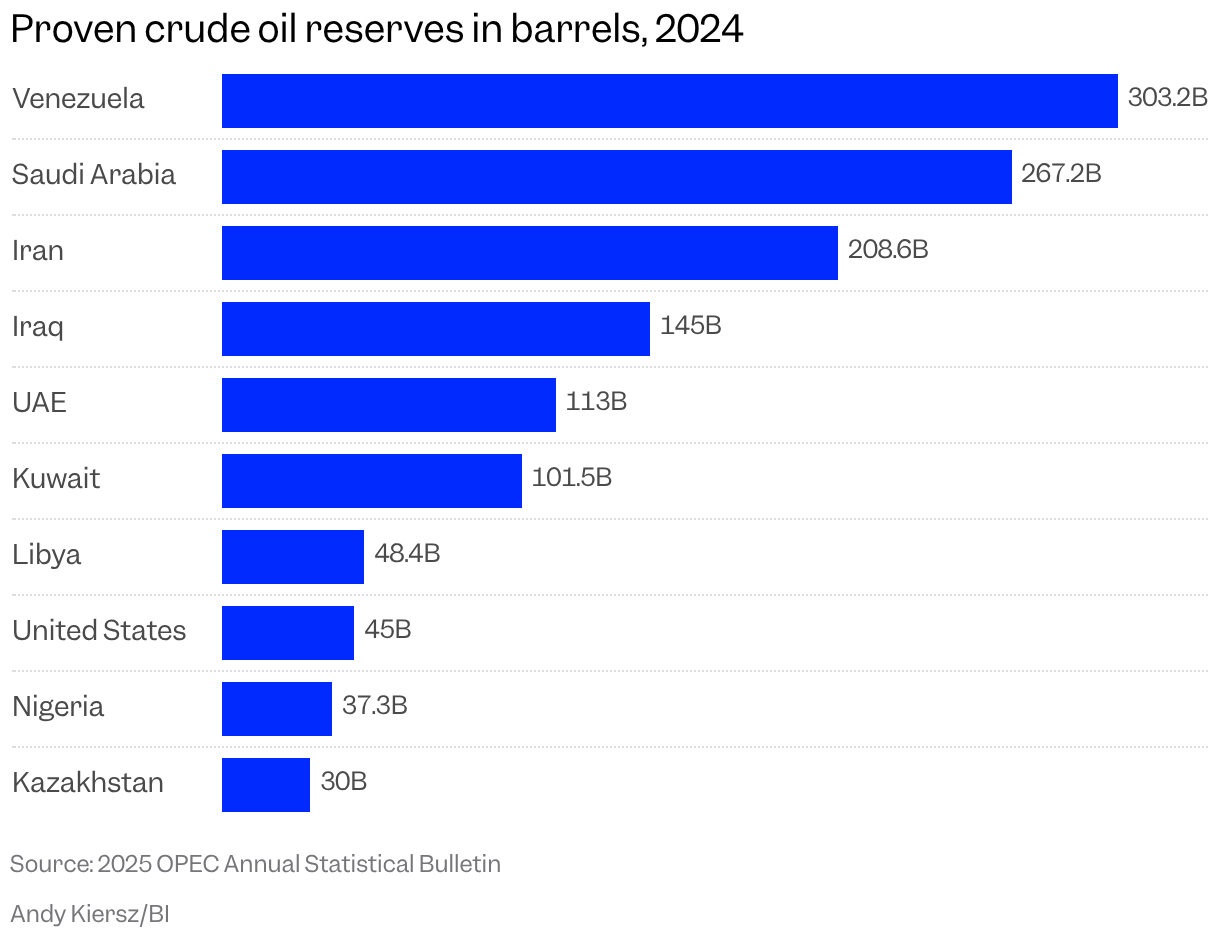
How I Used 4 AIs to Figure Out Venezuelan Oil in Minutes ↓The US just took control of the world’s largest oil reserves. At least that’s the headline. 303 billion barrels. More than Saudi Arabia. Regime change, oil flows, America wins.
But here’s the problem… You saw the news. You bookmarked some tweets. You’re “monitoring the situation.” You know what that means. It’s the investor equivalent of “I’ll start the diet Monday.” Meanwhile your feed is full of newly minted oil experts. Some say oil spikes. Some say it crashes. Some say this takes a decade. Without understanding what’s actually true, you can’t answer the question that matters: who wins and who loses? I’m going to show you a 4-step AI workflow I use to get the complete picture on any breaking event, and extract trade ideas, in minutes. I went from “monitoring” to a fully mapped view with ranked winners and losers. Here’s how. Step 1: Crowdsource the QuestionsI wanted a prompt that finds the best tweets on this topic. The people who actually know what they’re talking about, not the people who discovered what “heavy crude” means yesterday. I use Grok for this. It has native Twitter integration that other models don’t have. You can ask it to search recent posts, filter by account quality, and pull verbatim text with URLs. Claude and ChatGPT can’t do this natively. I seeded the prompt with a few tweets I thought were solid, then let it find more.
What came back was a corpus of 25 posts organized by angle, with author credentials and reasoning for why each view matters. Here’s what people are debating:
Now instead of bookmarked tweets you’ll never read, you have a corpus you can actually use. That’s the next step. Step 2: Build UnderstandingTweets tell you what themes experts are focused on. That’s a much better starting point than going in cold. If you just ask an AI “tell me about Venezuelan oil,” you get Wikipedia-level stuff. But if you start with expert takes, you can extract themes and research each one comprehensively. For this I use ChatGPT Deep Research. It has the most analytical lens of any model I’ve tested. The tradeoff: reports are dense and hard to read. We’ll solve that later. I use a meta-prompt. Instead of writing a research prompt myself, I give the AI the tweet corpus and ask it to generate the prompt for me. It extracts themes, identifies what needs explaining, then builds a comprehensive research agenda. You’re outsourcing the prompt engineering to the AI itself.
What came back was a 35 page report. The kind of thing that would take a junior analyst a week, except it took minutes and didn’t ask for a deadline extension.
Here’s what the analysis reveals: The World’s Largest Oil Reserves Are Not What You Think
The Collapse Began with a Self-Inflicted Brain Drain
This Isn’t a Quick Fix
This Is Geopolitics, Not Just Oil
The report covers a lot more: value chain mapping, refinery analysis, arbitration specifics, price scenarios, and historical precedents. Now you have the research. How does this translate into concrete ideas? That’s the next step. Step 3: Extract Trade IdeasThe deep research surfaced names, but ChatGPT reports are painful to read. The insights are buried in walls of text. Claude is better at writing. I feed it the research and ask for trade ideas with thesis, risks, and key sensitivities.
Here’s a sample: Gulf Coast Refiners (VLO, PBF): Long
Chevron (CVX): Long
Oilfield Services (SLB, HAL): Long
ConocoPhillips (COP): Long
Canadian Heavy Producers (SU, CVE, CNQ): Underweight
More trade ideas in the full results linked above. Now you have ideas. How do you make sense of everything? That’s the final step. Step 4: Create Your Second BrainRemember how I said ChatGPT reports are dense and hard to read? NotebookLM solves that. Instead of manually slogging through 30 pages, I drop the report into NotebookLM and let it do the work. I can generate a mind map to see everything structured visually. I can chat with the report and ask specific questions. No more scrolling through walls of text trying to find that one paragraph about upgrader capacity. I add three things: the tweet corpus from Step 1, the research from Step 2, and the trade ideas from Step 3.
First thing I do is create a mind map. I need to see everything structured visually. That’s how my brain works. Now I can ask follow-up questions. “What’s the timeline for upgrader rehabilitation?” “Which refiners have the most coking capacity?” The answers pull from everything I’ve built. As I dig deeper, I add more sources: 10-Ks, earnings transcripts, news as it comes out. The notebook grows with me. My next steps: evaluate catalysts, schedule AI to surface relevant news, and start diligence on names I’m excited about. All from the NotebookLM. The Bottom LineThis process works for any trending topic. Silver. Copper. BOJ policy. Tariffs. You know the pattern. Topic starts trending. You bookmark tweets because some random guy replied “worth reading.” You tell yourself you’ll dig in later. Later never comes. You never form a view. This workflow changes that. Four tools. Minutes of work. From “monitoring the situation” to full mental models and specific trade ideas. Not days. Minutes. Venezuela was the example. The process works for anything. |
Enjoyed this article?
Get more AI for finance content delivered to your inbox.