Bring ChatGPT and Claude to Your IC
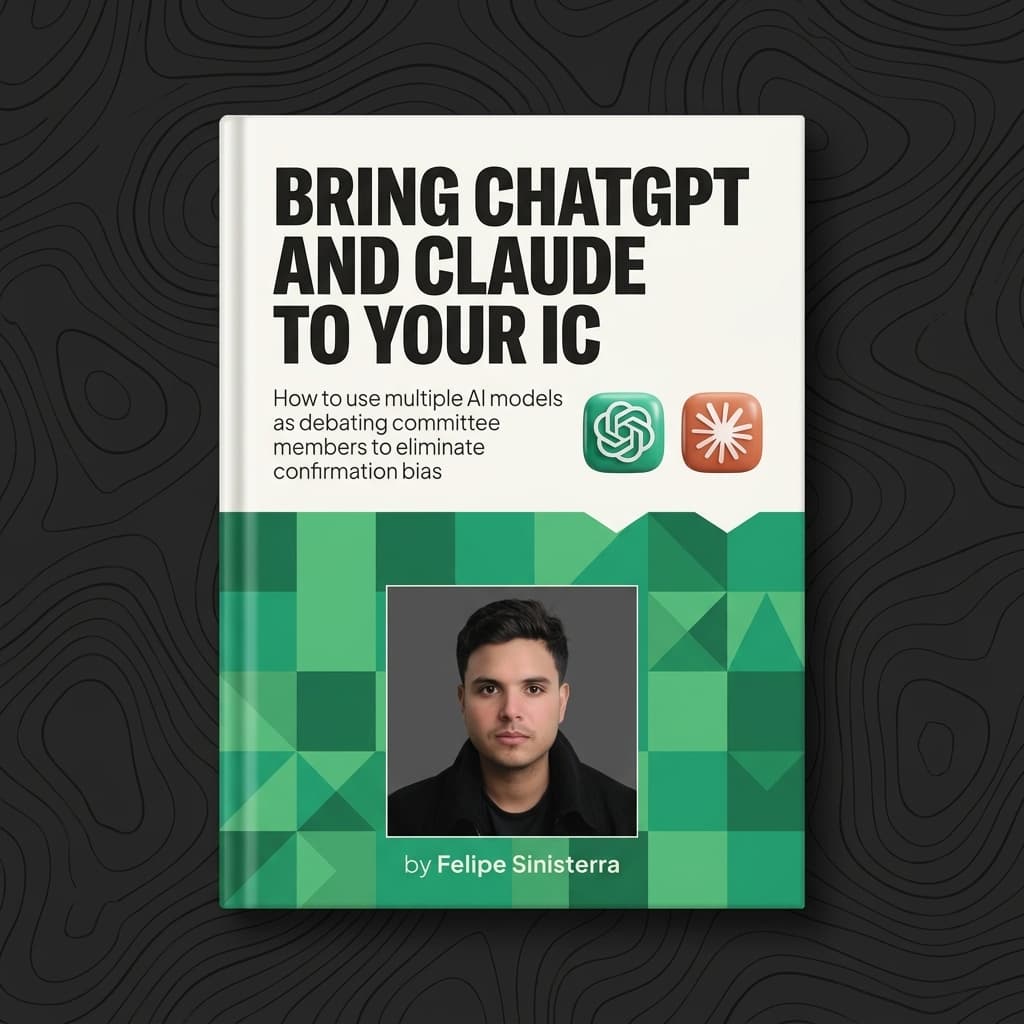
You’re probably using ChatGPT for investment research. Maybe Claude too. But you’re treating them like glorified research assistants when you should be treating them like committee members. Look, they can both search the web, conduct research, and think more critically than most junior analysts. But here's how you can level up: I've been speaking to a lot young PMs lately, and the one thing that caught my attention is that they make their AIs debate each other. It’s like having a real-time investment committee where Claude, ChatGPT, and even different instances of the same model all contribute based on what they are strongest at. One focused on investment frameworks, another on data retrieval, another on qualitative research, and so on. This is how you avoid the confirmation bias from using a single LLM, which would tank your returns. The Confirmation Bias Problem That’s Costing You AlphaHere’s the thing about LLMs: they’re sophisticated yes-men. Feed them your investment thesis and they’ll build you a compelling case. Ask for risks and they’ll find manageable, hedge-able concerns. Sound familiar? It’s exactly like telling your fresh out-of-Wharton junior analyst to build an IC memo on an opportunity. They’ll do a great job, but will probably show you what you want to see (until you train them to seek the truth). We'd all rather make money than miss the blind spots because we are being appeased to. You shouldn't battle your AI models for simple stuff like pulling earnings dates, market caps, or running standard comps. But when you’re dealing with complex investment decisions that require research and reasoning, you need your AIs to challenge each other. Here’s exactly how this works in practice. My AI Investment Committee SetupI always start with ChatGPT o3 as my quarterback. OpenAI is better as the high-level architect because it has deep memory of our previous conversations, I’ve built custom instructions trained on my investment style, and it has the best reasoning at a macro level. Here’s a real example of how I put it to work: For this level of analysis, o3 plus search gives you the best reasoning capabilities. TLDR, here’s what came back:
This was thorough and better-articulated than most mid-level analysts could pull together on their own. Most points were solid, though everything needs context. Multiples depend heavily on market conditions, unit economics vary by customer type and product nature. It’s generalist advice that needs company-specific tuning. When I pushed for additional concerns, ChatGPT suggested:
Most of this doesn’t really matter for public equities analysis. So I asked my second committee member with a funny French name: Claude. Bringing In the ContrarianI copy ChatGPT’s analysis and prompt Claude Opus 4.0: Claude came back swinging: Now this is what I’m talking about. Real intellectual rigor, challenging the other PM. Claude peeled back several layers that ChatGPT missed, found holes in the argument, and provided more nuanced context. The beauty is that it debates with logic, like two investors "seeking the truth" vs. fighting for political power. And this was much more powerful than if I had just prompted Claude from scratch. Making Them Fight Each OtherNow I suspected they were both missing something. They were focusing on their initial frameworks instead of getting to what really matters. So I pushed Claude further: After some back and forth, I provided ChatGPT’s response and asked Claude for a final verdict: Here’s what’s interesting: ChatGPT functions like my high-level architect that can think about what matters, but Claude is a much better closer and more opinionated. ChatGPT is that really smart investor who knows how to analyze investments but won’t give you a clean answer on what action to take because he’s trying not to look dumb. Claude is more opinionated, really smart, but needs the right inputs to finalize decisions. You could say ChatGPT is the analyst, Claude is the PM making the calls with yes/no answers. Claude’s final synthesis. Pretty good for a beginner, but Bill Ackman would probably have much more of a secret sauce. Your Copy-Paste Battle FrameworkHere's my attempt at an evergreen template for any situation. Step 1: Primary analysis with ChatGPT o3 (always enable web search) Step 2: Challenge with Claude using this prompt: Act as a [contrarian analyst/risk manager/sector specialist]. I want you to challenge this investment analysis with institutional-grade precision. Original question: [your investment question] I’m attaching the first analysis. Find the holes, challenge assumptions, identify blind spots. I need to make sure I’m not falling into confirmation bias on a [position size] position. Step 3: Battle until consensus or clear disagreement emerges Advanced Move: Use the same prompt on parallel conversations when testing complex theses. Compare answers. Challenge the weaker analysis with the stronger one. Why Financial AIs “Hallucinate”LLMs don’t necessarily provide incorrect information; they just regurgitate a bunch of information without judgment of what really matters. If you're an institutional investor, you definitely want to be prompting more of your secret sauce to help refine the model with your way of thinking. This can get you better results that more align with your own investment philosophy. The training problem: Models learn to sound authoritative, not to be right. In finance, sounding smart and being profitable are very different things. Jim Simons always said ”We never override the computer.” The thing is, LLMs are not deterministic; for every input, you really don't know what you're going to get. So you need to feel free to override and challenge the model. For those of you worried about AI taking your jobs, this is one of the reasons AI can't replace you. Quick Anti-Hallucination ChecklistWhen you catch yourself nodding along with everything an AI tells you, you need to get it to be controversial:
Remember: In finance, being wrong is expensive. Being confidently wrong is catastrophic. You’re a human with a brain that’s much better than any AI out there. You have judgment. Use it. AI is your secret weapon, but you still need to know how to wield it. How You Can Win With Your New AI IC MembersMost funds are still using AI like glorified research assistants. Single queries, accepting first answers, missing the real alpha. The winners are building AI research engines: systematic challenge frameworks, automated contrarian analysis, multi-model consensus building. Think thousands of agents coordinating with each other. One is a committee member, another’s job is quality control, another figures out which data sources to use, another refines prompts before passing them to an LLM. Just like in a fund you have different levels of checks and balances, this is how you build AI-native investment processes. AI is advancing rapidly, but for me two key questions I look for are: a) are you smart? and b) are you opinionated? Use each LLM to its advantage and upgrade your investment committee. |
Enjoyed this article?
Get more AI for finance content delivered to your inbox.